 Skip to content
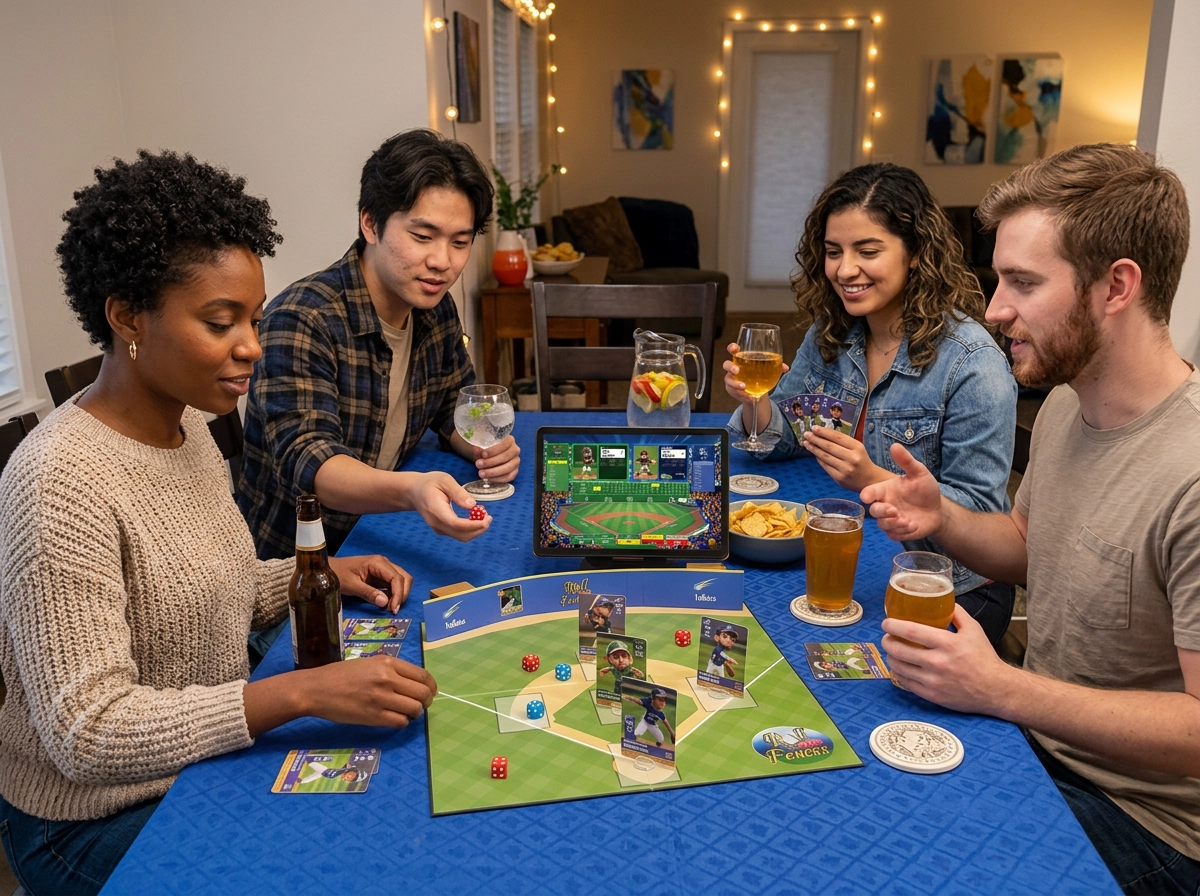
If a baseball game on your table feels flat by the third inning, it is usually not because you picked the wrong sport. It is because the design missed the tension that makes baseball great in the first place. The best baseball board game does not just hand you a bat, a die, and a scorepad. It gives you momentum swings, lineup decisions, late-game nerves, and that little jolt of belief when one roll can change everything.
That is the real standard. Not whether a game has mini helmets, vintage stats, or a clever name. The question is whether it captures the feeling of baseball while still being fun for actual humans sitting around an actual table on a Friday night.
What makes the best baseball board game?
Baseball is a tricky sport to translate into tabletop form. Too simple, and it becomes a repetitive dice exercise with no drama. Too detailed, and it starts to feel like homework in a scorebook. The sweet spot lives somewhere in between – accessible enough for families and casual fans, but sharp enough to reward smart decisions.
That means pacing matters. A baseball board game should move with rhythm. You want the quiet build of an inning, the pressure of runners on base, and the chance for a big moment without getting buried in charts or edge-case rules. A good design knows when to abstract and when to let players feel in control.
Replayability matters just as much. Baseball fans know no two games feel exactly the same, even when the rules never change. The best designs recreate that variety through roster choices, probabilities, player powers, momentum systems, or changing risk-reward decisions. If every matchup plays out in the same pattern, the illusion breaks fast.
Then there is the social side. This is where many sports games miss the plate. A good baseball board game should be fun to talk through, react to, and remember after the final out. It should create cheers, groans, second-guessing, and those little bits of table banter that make game night feel like an event.
Best baseball board game buyers should look past theme alone
A baseball theme can carry a lot of goodwill. Give people innings, runs, and a ninth-inning comeback chance, and they are already halfway in. But theme alone does not make a game worth owning.
The stronger question is how the game uses baseball to create decisions. Are you managing your roster, choosing when to push your luck, and reading the state of the game? Or are you just resolving random outcomes with baseball vocabulary attached? There is a huge difference.
For families, the best fit is usually a game that teaches quickly and opens up over time. Kids and casual players need to understand what is happening and feel competitive right away. More experienced players want room to get clever. That crossover is rare, but when a game nails it, it becomes the one that keeps coming off the shelf.
For hobby gamers, depth does not have to mean density. Strategy can come from timing, probabilities, and tension rather than a thirty-page rulebook. In fact, sports games often shine brightest when they let players feel smart without forcing them to study a simulation system for a week.
The best baseball board game feels like a real contest
What baseball fans love is not constant action. It is meaningful action. Every at-bat carries possibility. Every pitching change or lineup choice hints at a bigger plan. A strong tabletop baseball game respects that by making each turn feel connected to the larger story.
This is where momentum becomes a design superpower. When a game lets pressure build, lets streaks feel dangerous, and lets players sense a shift before the scoreboard confirms it, the experience starts to feel alive. You are not just counting runs. You are managing a contest.
Probability also matters more than many buyers realize. Baseball is built on percentages, matchups, and calculated risks. The right game does not hide that. It uses probability to create drama players can read and influence. When your decisions shape the odds, every roll gets more exciting because it feels earned.
That is also why roster management can elevate a baseball board game so much. Choosing who is in the lineup, who gets the key opportunity, or how to balance consistency against power creates texture. Suddenly the game is not only about what happened. It is about why it happened.
Why presentation changes everything
Sports live on atmosphere. The crack of the bat, the scoreboard pressure, the crowd noise, the feeling that something big might happen right now – those details are not fluff. They are part of why people care.
A baseball board game that understands presentation gains a real edge. Clear visual design, easy score tracking, and components that reinforce the flow of play help everyone stay engaged. Better still is when the experience extends beyond cardboard without turning into a gimmick.
Digital enhancements can do that beautifully when they support the table instead of stealing attention from it. Scoreboard tracking, sound, celebration moments, and light app integration can make a game feel bigger, cleaner, and more memorable. The key is intent. Tech should amplify the ballpark experience in a box, not replace the human energy around the table.
That is one reason newer designs have a chance to stand out. They are not limited to copying old-school sports sims or bare-bones family games. They can combine smart tabletop mechanics with digital support in a way that feels modern, intuitive, and genuinely fun.
Where many baseball games strike out
Some baseball games lean so hard into realism that they forget the room. Yes, detailed stats and simulation accuracy can be satisfying for a niche audience. But for most families and mixed-skill groups, that level of granularity slows the fun. The emotional rhythm of baseball gets buried under procedure.
Others go too far the other way. They simplify everything into generic luck and call it accessible. That may work for ten minutes, but it rarely holds attention for a full game night. Without tactical choices, baseball loses its chess-match quality.
The best answer is not a one-size-fits-all formula. It depends on who is playing. A dedicated simulation fan may want a deep stat engine. A family with younger kids may want fast innings and dramatic outcomes. Most groups, though, are looking for the middle path – easy to learn, satisfying to master, and exciting from first pitch to final out.
A modern contender for the best baseball board game
If your ideal baseball game includes strategy, momentum, and a little extra stadium magic, Roll for the Fences makes a strong case. It is built as a two-player baseball dice game, but it plays with more texture than that label suggests. You are not just rolling and hoping. You are making lineup decisions, managing probabilities, and trying to seize the emotional swing of the game before your opponent does.
That mix is what makes it stand out for mixed tables. Families can get into it quickly because the core play is approachable and dramatic. Strategy-minded players have more to chew on because the choices matter, the odds are readable, and timing changes everything. It respects baseball without drowning the table in simulation clutter.
The companion app adds another layer that feels true to the sport. Scoreboard tracking keeps the game moving cleanly, while stadium audio and celebration videos turn big moments into actual events. Instead of feeling tacked on, the digital side supports the tabletop side. It helps create a fuller ballpark atmosphere without pulling players out of the head-to-head battle.
That balance is hard to pull off. When it works, though, the game stops feeling like a novelty and starts feeling like a night worth repeating.
How to choose the right game for your table
Start with your group, not the box. If you mostly play with younger kids or casual guests, look for a game that explains itself quickly and creates instant highlights. If your table loves strategy, prioritize meaningful decisions over decorative theme. If your group wants both, the winner is usually the design that layers depth under a clean ruleset.
Also think about what kind of baseball experience you want. Some players want historical simulation. Others want quick competition and comeback drama. Others want the social energy of a live game translated into something they can share from the kitchen table. All of those are valid, but they are not the same purchase.
The best baseball board game is the one that gets played again next week. Not the one that looks smartest on the shelf. Not the one with the longest feature list. The one that turns a few open hours into tension, laughter, rivalry, and one more inning because nobody is ready to call it yet.
That is the bar worth aiming for. Find the game that makes your table lean in when the bases are loaded, and you will know you picked the right one.
Leave a Reply